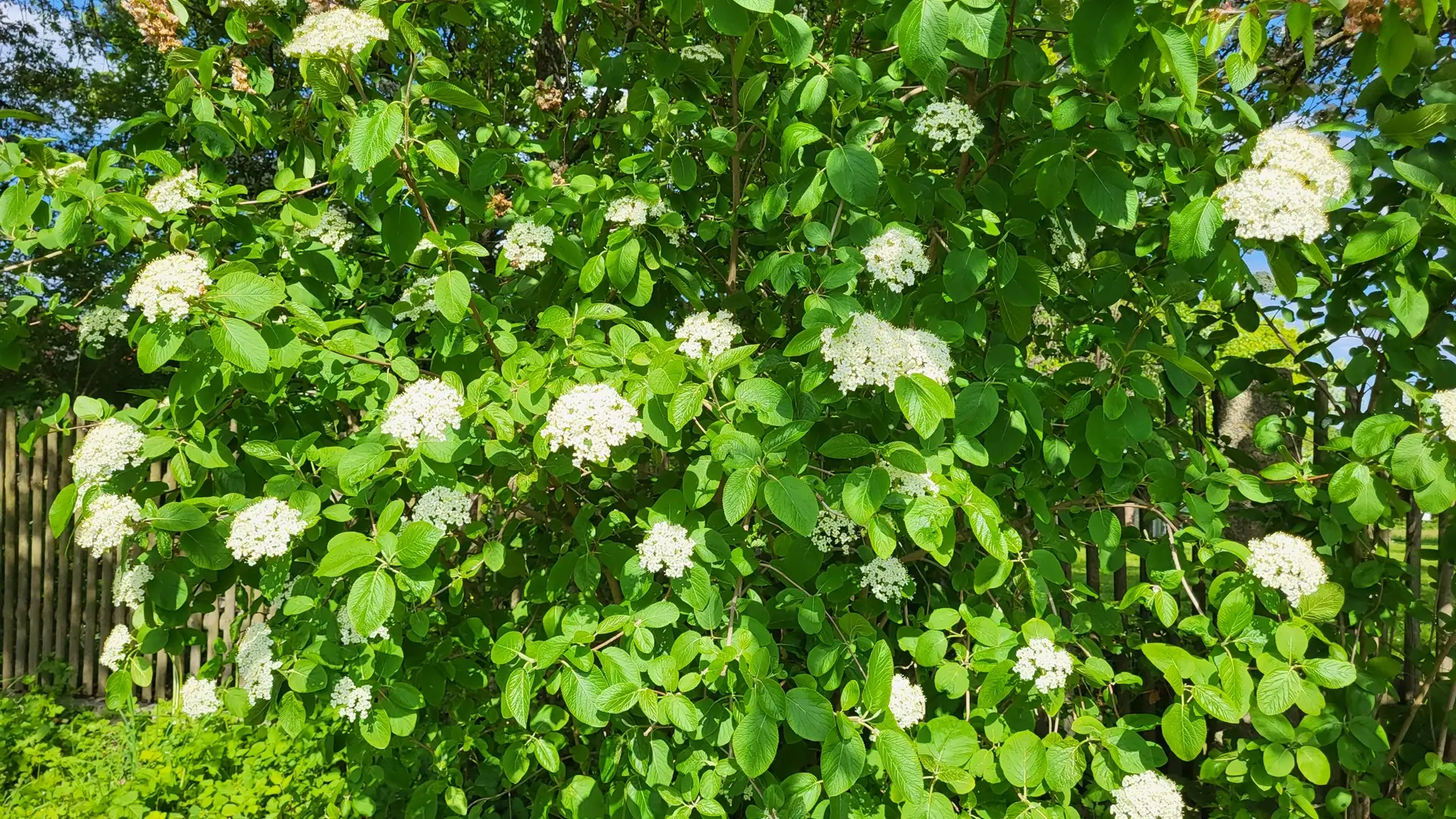
The area of wild shrubs in the district teaching garden is dedicated to native shrubs and smaller trees that have shaped our landscape for centuries. Whether along field margins, forest edges, slopes, or as hedges lining pathways, wild shrubs are an essential part of the cultural landscape. They structure the scenery, protect against wind and erosion, and provide valuable habitats for numerous animal species. In the district teaching garden, their ecological, cultural, and landscape significance is presented in a clear and engaging way.
Throughout the year, wild shrubs fulfill a wide range of roles. As early as late winter and early spring, they are among the first plants to bloom. Species such as blackthorn, hawthorn, and hazel offer one of the most important food sources for wild bees, bumblebees, and other pollinating insects with their blossoms and catkins. At a time when food is still scarce, these early blooms are of immense value. The lively buzzing and humming around the shrubs in spring clearly show how closely plant and animal life are connected.
In summer, the densely branched and often thorny shrubs take on a special function as shelter and habitat. Many bird species use them as nesting sites, as the dense branches provide protection from predators and harsh weather. Young birds are raised here, insects find refuge, and small mammals also benefit from the cover. For visitors to the district teaching garden, this opens up exciting opportunities for observation. With a bit of patience, birds can be seen feeding their young or flying in and out of the shrubs.
In autumn, berries, rose hips, and nuts ripen. The fruits of wild roses, hawthorn, and elder provide an energy rich food source that helps many birds and small mammals build up reserves for the cold season. Wild shrubs therefore play a crucial role in maintaining ecological balance. Without these natural food sources, many animal species in our cultural landscape would be far more at risk.
Even in winter, wild shrubs retain their importance. Although they have shed their leaves, their branching structure continues to offer shelter and places of retreat. At the same time, they provide structure and form in the garden and show that nature has its own appeal even in its resting phase.
A special role is played by the black elder, which stands out as the symbolic plant of the district. The elder is far more than just a shrub. In early summer, it bears large, cream white flower clusters whose sweet scent attracts numerous insects. In late summer and autumn, these are followed by deep black, glossy berries that are highly valued by many bird species.
In addition, elder has been firmly rooted in regional culture for generations. Its flowers and berries are used to make syrup, juice, jelly, or tea. In earlier times, it was known as the “pharmacy of the common people” and was found in almost every farmhouse garden. It was believed to have healing and protective qualities, and in many places it was surrounded by legends and traditions.
This special significance is also reflected in the tradition of the Elder Queen. She represents the district plant at events and celebrations and stands as a symbol of local identity, awareness of nature, and the preservation of regional customs. In this way, the elder uniquely connects nature, history, and community.
The wild shrub area in the district teaching garden clearly shows that native shrubs are not merely decorative elements but make an essential contribution to biodiversity. They create habitats, secure food sources, and at the same time preserve a piece of regional identity.