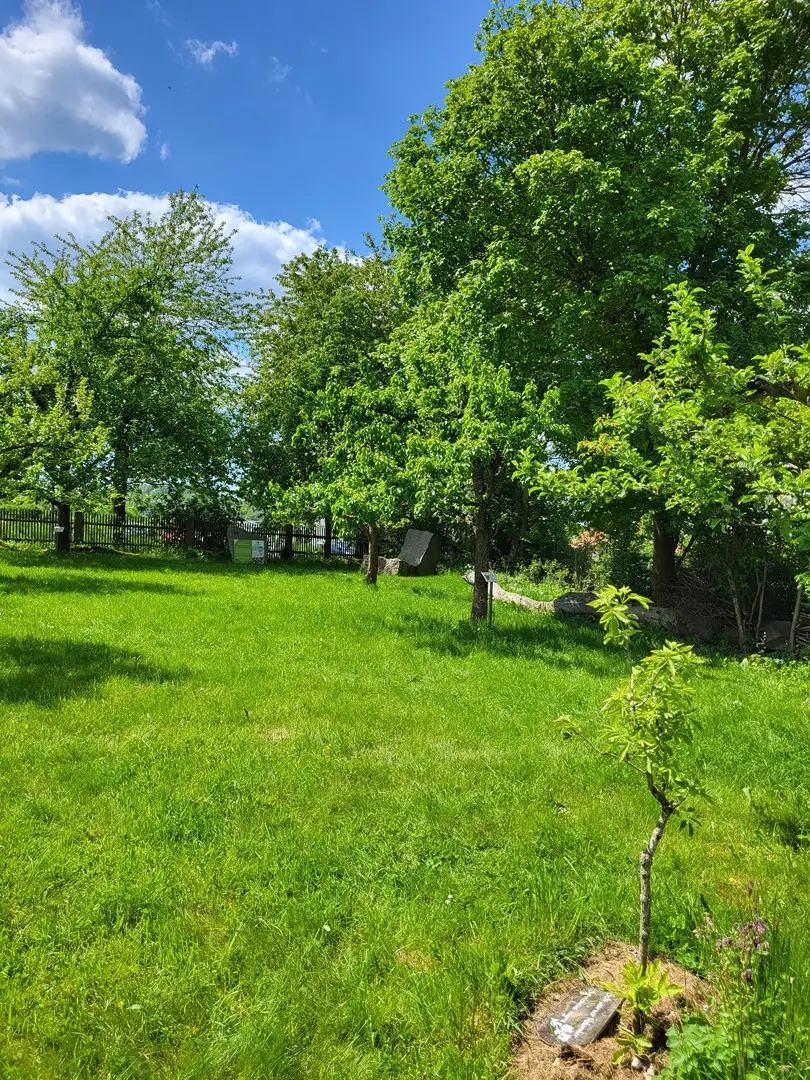
The orchard in the district teaching garden is a place where experiencing nature, cultural history, and sustainable use come together in a unique way. For centuries, fruit trees have shaped our rural landscapes. Meadow orchards and traditional fruit gardens not only provided valuable food but also defined the appearance of entire regions. The orchard continues this tradition and shows how important the cultivation of native fruit varieties remains to this day.
Typical native fruit species such as apple, pear, cherry, and plum form the foundation of the garden. In the district teaching garden, particular attention is given to cultivating old or regional varieties that stand out for their resilience, distinctive flavor, and adaptability. Preserving them makes an important contribution to genetic diversity and safeguards a valuable cultural heritage that is increasingly disappearing elsewhere.
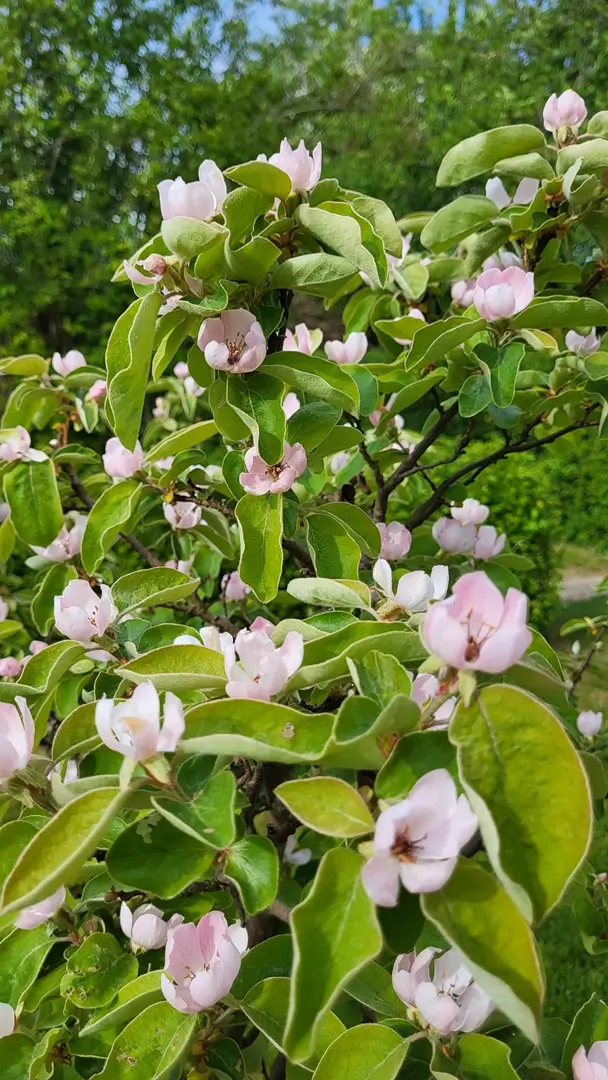
In spring, the orchard transforms into an impressive sea of blossoms. Delicate white and pink flowers cover the tree crowns and attract numerous insects. For honeybees, wild bees, and bumblebees, the blossoms provide an essential food source. At the same time, their pollination work is crucial for the development of fruit later in the year. The orchard makes this delicate interaction between plants and pollinators clearly visible. The buzzing in the treetops and the scent of the blossoms give this season its distinctive character.
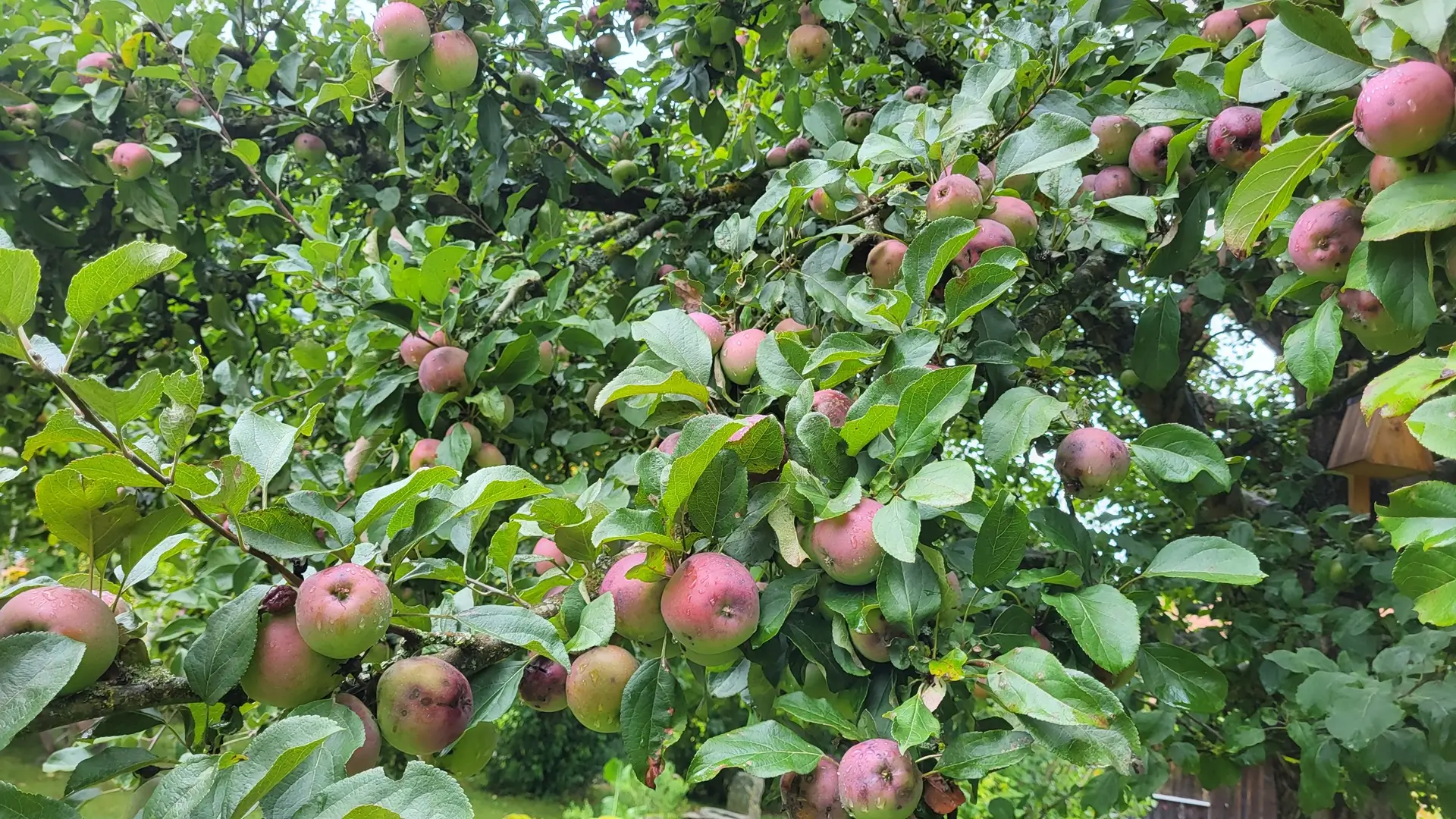
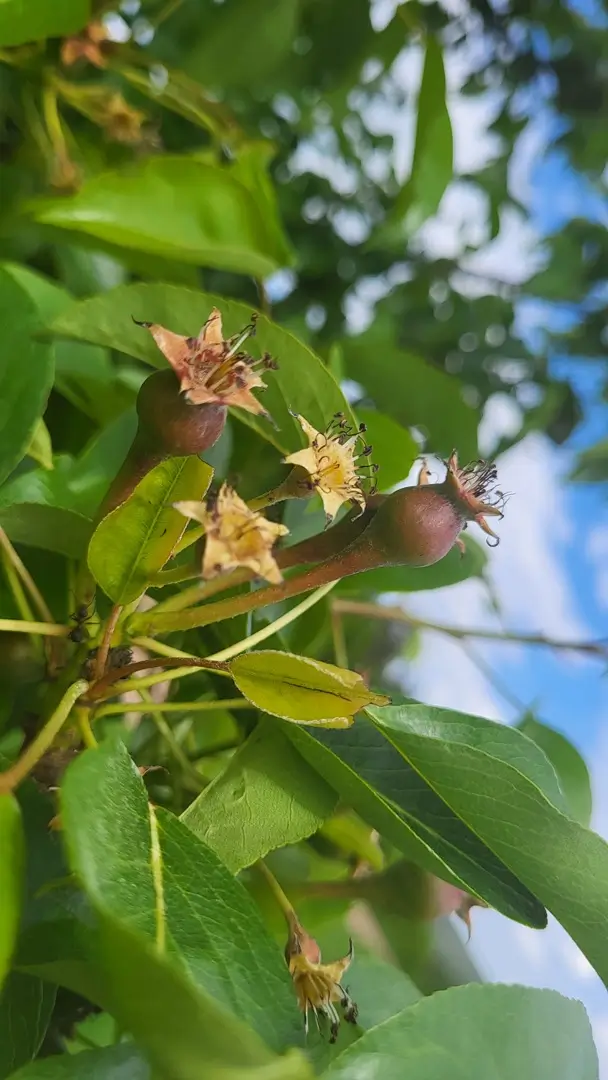
In summer, the fruits begin to grow. The tree canopies provide shade and create a pleasant microclimate. Beneath the trees, species rich meadow vegetation often develops, offering additional habitat for insects. Older fruit trees frequently contain cavities or areas of dead wood that serve as nesting and shelter sites for birds, bats, and other animals. In this way, the orchard fulfills an important ecological role that goes far beyond fruit production.
Autumn marks the highlight of the fruit growing year. Apples, pears, cherries, and plums are now harvested. Whether eaten fresh, pressed into juice, or made into jam, compote, or cakes, the orchard illustrates the value of regional and seasonal food in a particularly vivid way. At the same time, many animal species benefit from fallen fruit, which provides an additional food source and continues the natural cycle.
Even in winter, the orchard remains significant. The distinctive and often gnarled silhouettes of the trees become clearly visible, revealing their natural structure. During this time, important maintenance work such as proper winter pruning is carried out. This helps maintain tree health, stabilize the crown structure, and encourage a good yield in the coming year. It becomes clear that successful fruit growing requires knowledge, patience, and continuous care.
In addition, the orchard serves as an important place for learning and demonstration. It shows how fruit trees are properly planted, trained, and pruned, and what site conditions they require. Visitors gain inspiration for their own gardens and learn how selecting suitable varieties and using nature friendly care methods can contribute to biodiversity.
The orchard in the district teaching garden therefore represents far more than the production of fruit. It is an expression of regional identity, a living cultural heritage, and a valuable habitat at the same time. Here, it becomes clear how sustainable use, ecological responsibility, and enjoyment can be brought into harmony.