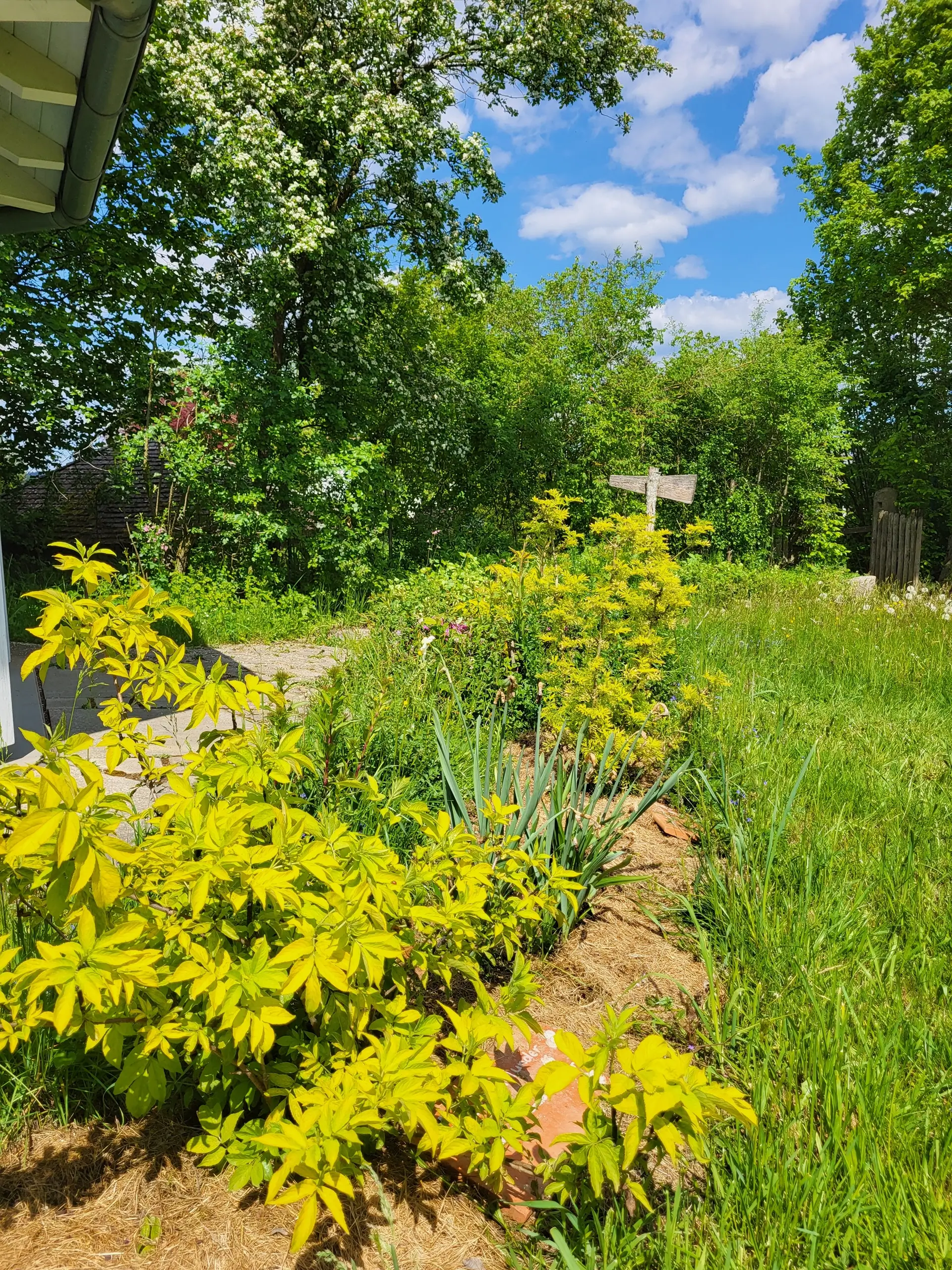
The ornamental shrub area in the district teaching garden presents a rich selection of shrubs and small trees that impress with their abundance of blossoms, leaf color, growth form, and decorative fruits. Unlike productive trees such as fruit trees, ornamental shrubs are primarily valued for aesthetics and garden design. They create accents in beds, along pathways, or in borders, while also providing shelter for animals. Through their blossoms, fruits, and foliage, they contribute to ecological diversity, offering food and protection for insects, birds, and small mammals, and are therefore especially friendly to insects.
In spring, this part of the garden begins with a striking display of blossoms. Shrubs and small trees such as witch hazel, rhododendrons, lilac, or magnolia unfold their flowers early in the year, long before many other plants begin to bloom. Witch hazel stands out with its bright yellow, orange, or reddish, often fragrant flowers, which serve as an important first food source for insects such as bees and butterflies after winter. Other richly flowering shrubs also attract numerous insects and turn the garden into a lively habitat.
In summer, the ornamental shrubs develop dense foliage that provides shade and habitat for animals. Hedges structure pathways and garden areas, while solitary shrubs or small ornamental trees create striking focal points. Flowering species such as hydrangeas or butterfly bush continue to attract insects, including wild bees, bumblebees, and butterflies. In this way, ornamental shrubs actively support insect diversity and ensure a steady food supply during the summer months.
In autumn, fruits, berries, and colorful foliage come into focus. Ornamental shrubs such as rowan, blackthorn, or mountain ash provide food for birds and small mammals while also creating visual highlights with red, orange, or blue fruits. Many of these fruits also serve as food for insects such as ants and beetles, maintaining ecological interactions. The autumn foliage further enhances the visual impact of the garden.
Even in winter, ornamental shrubs retain their appeal. Bare branches and remaining fruits provide structure and character in the garden. Evergreen species such as rhododendrons, boxwood, or witch hazel bring color into the colder season and continue to offer shelter for animals. The variety of growth forms, leaves, fruits, and blossoms makes ornamental shrubs indispensable and insect friendly elements of garden design.
The ornamental shrubs in the district teaching garden, including witch hazel, clearly demonstrate how beauty, structure, ecological function, and support for insects go hand in hand. They inspire creative garden ideas, promote awareness of biodiversity, and show that decorative plants are not merely ornamental but valuable components of an ecologically functioning garden.