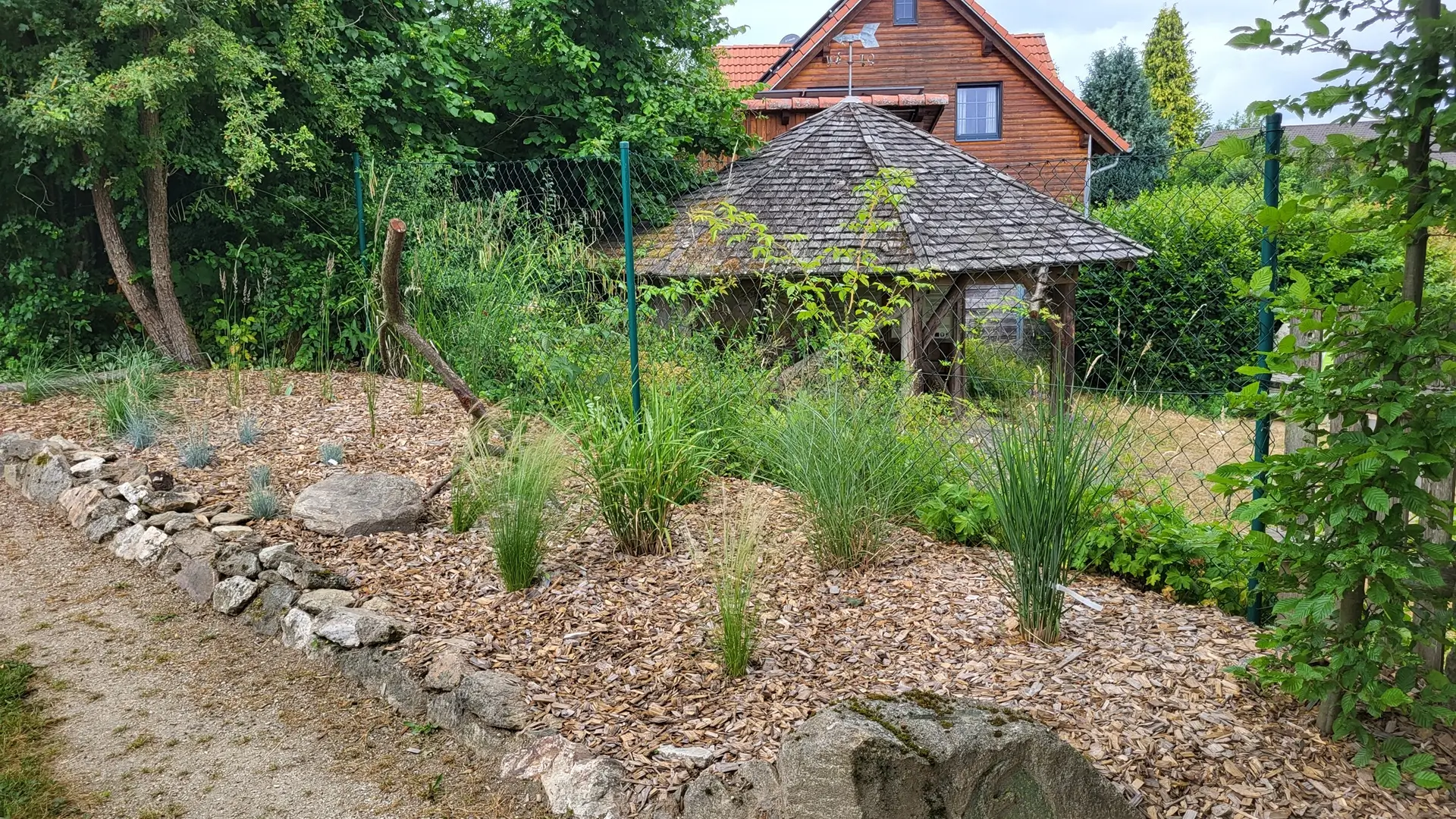
The grass section in the district teaching garden focuses on drought tolerant ornamental grasses that thrive even under particularly dry or sunny conditions. These plants are ideal for natural, low maintenance, and sustainable garden concepts, as they require little water, are resilient to heat and varying site conditions, and need only minimal care. At the same time, they fulfill important ecological functions. Their flower heads provide pollen and seeds for bees, wild bees, butterflies, and other pollinators, while their dense clumps offer shelter and retreat for birds, spiders, and small animals. In this way, grasses combine aesthetic appeal with support for insects and ecological value.
In spring, the drought tolerant grasses begin to sprout, bringing fresh greenery and structure into the beds. Species such as feather grass, fountain grass, blue fescue, or switchgrass show their characteristic stems early on, adding movement, rhythm, and color to planted areas. Early shoots provide initial food sources for insects such as wild bees and mark the beginning of the active garden year. Their ability to withstand dry conditions makes these grasses especially easy to care for, as they require little watering and remain vigorous even in heat.
In summer, the grasses develop their full display of blossoms. The panicles, spikes, or feathery plumes of many species move gracefully in the wind, giving the beds a sense of liveliness and dynamism. The plants attract insects that depend on nectar and pollen while also offering shelter for small animals within their dense clumps. Thanks to their compact, clump forming growth habit, these grasses can be combined very effectively with perennials or ground cover plants, creating diverse, natural, and at the same time low maintenance plantings.
In autumn, the decorative effect of the grasses becomes especially striking. Many species turn golden yellow, copper colored, or reddish, adding seasonal highlights to the beds. The dried flower heads often remain standing throughout winter, providing seeds for birds and continuing to offer habitat for insects and small animals. This ensures that the grass section remains ecologically valuable and friendly to insects even in the later part of the year.
In winter, drought tolerant grasses retain their structural impact. Dried stems, flower heads, and delicate leaves create form, rhythm, and visual lines in the garden. Evergreen or hardy species add touches of color and protect small animals from wind and cold. Visitors can observe the adaptation strategies of these grasses, their resistance to drought, and their ease of care, gaining insight into how natural and sustainable plantings can be designed.
The grass section in the district teaching garden clearly demonstrates how drought tolerance, low maintenance care, aesthetic appeal, and ecological function can be combined. These grasses not only provide decorative effects but also offer habitat, food, and protection for animals, promote insect friendliness and biodiversity, and inspire the creation of low maintenance, natural, and attractive plantings in private gardens.