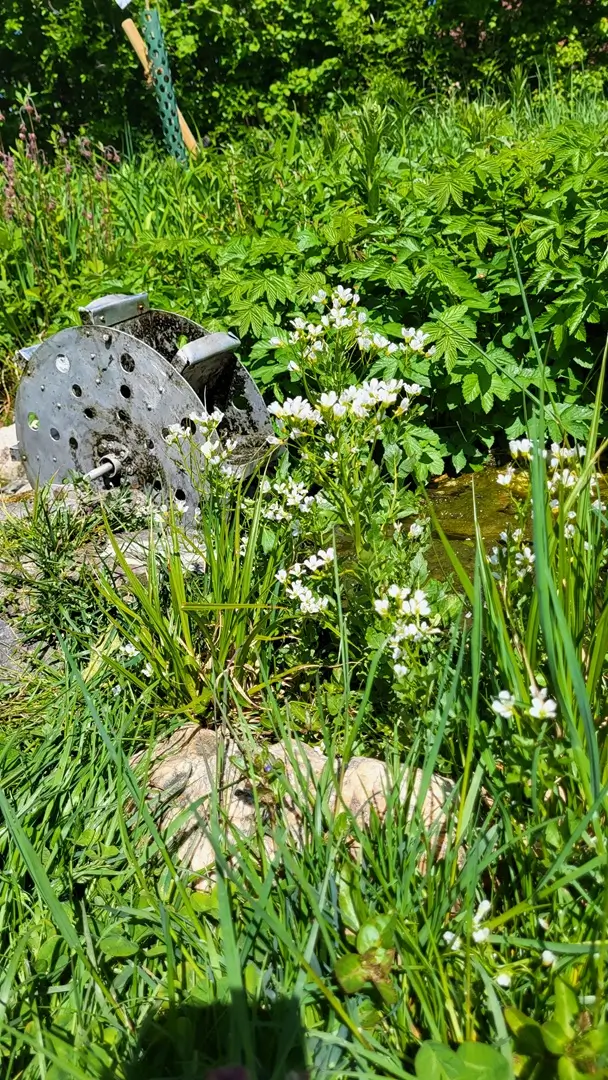
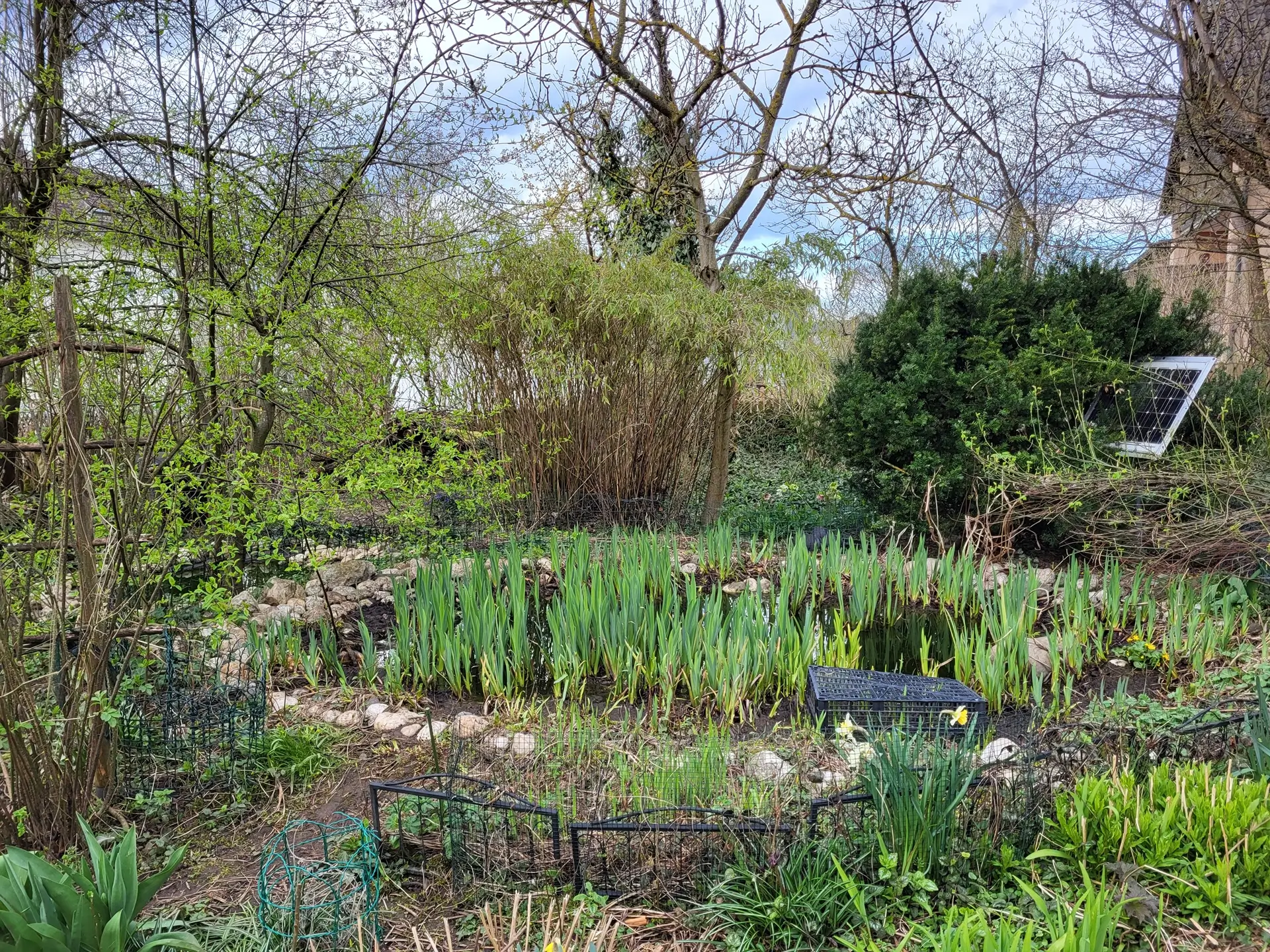
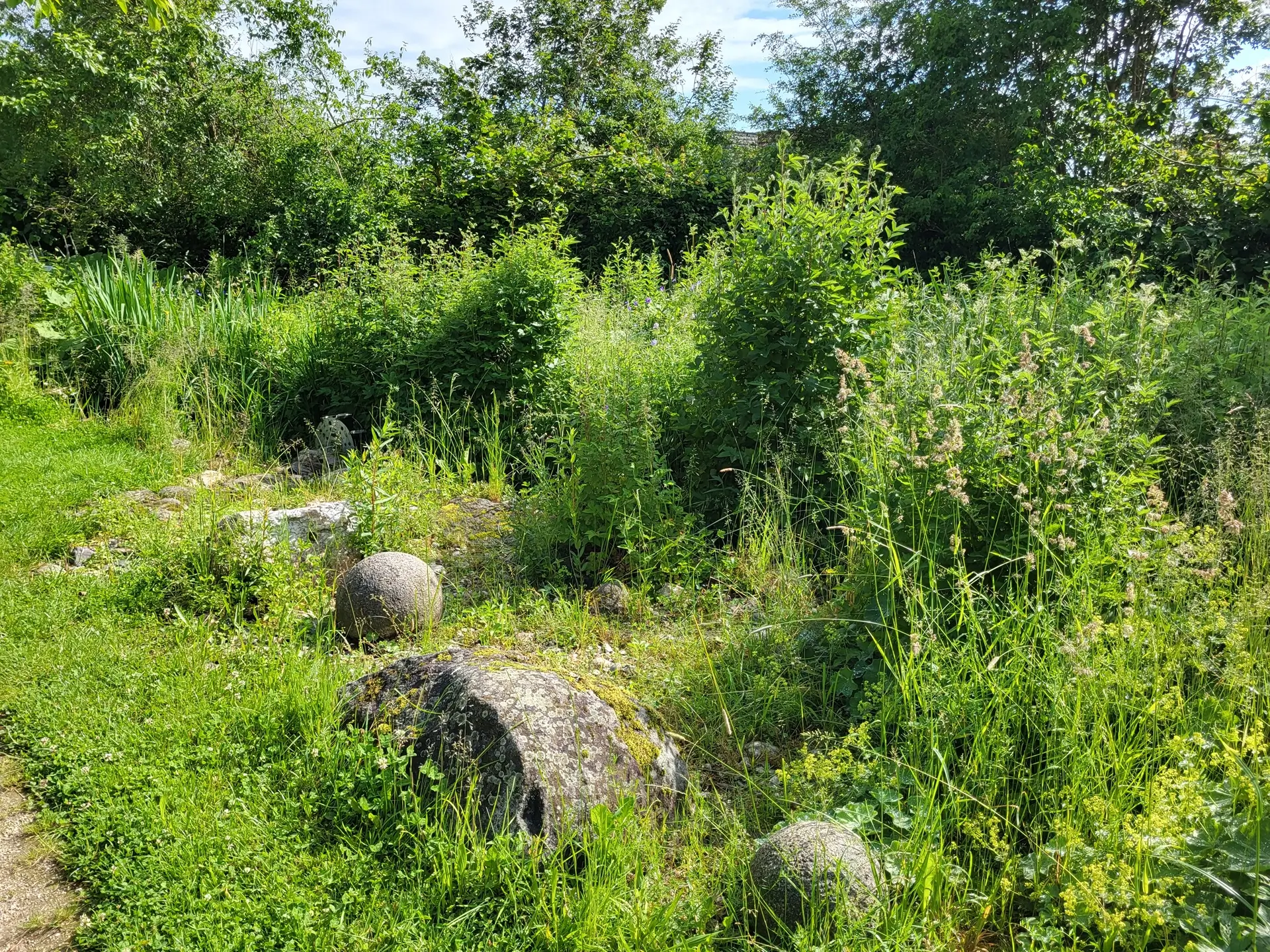
The wetland and pond plant area in the district teaching garden is dedicated to plants that thrive in moist locations, along banks, or in the water, occupying a unique ecological niche. These plant species play a key role in stabilizing shorelines, filtering water, providing shelter for small animals and birds, and creating habitats for numerous insects, amphibians, and other aquatic life. At the same time, they enrich the garden experience with their decorative leaves, blossoms, and distinctive seed heads, clearly demonstrating the diversity of water related plants.
In spring, wetland and pond plants begin to sprout as temperatures rise. Species such as cattails, irises, marsh marigolds, or wetland grasses add the first green accents around the water and provide food and shelter for insects, amphibians, and small aquatic animals. Early flowering species supply nectar for bees, bumblebees, and butterflies, while young shoots offer hiding places for birds. The variety of heights and growth forms allows for diverse and well structured design of shore areas and shallow ponds.
In summer, the plants display their full abundance of blossoms. Flowering irises, marsh marigolds, or rushes attract numerous insects, while cattails and sedges form dense clumps that provide shelter for small animals and amphibians. Wetland and pond plants contribute to the ecological stability of the water, reduce erosion, bind nutrients, and thus improve water quality. At the same time, they create a natural and nature inspired aesthetic that makes the water garden appear lively and attractive.
In autumn, many species develop distinctive seed heads and fruits that serve as food for birds and small animals. Grass like wetland plants and reeds continue to form dense structures that are used as overwintering sites for insects and spiders. The autumn colors, ranging from rich green to shades of yellow and brown and even golden seed heads, add further decorative effects and extend the visual appeal of pond and wetland areas.
In winter, the area remains interesting through dried stems, leaves, and seed heads. Many plants retain their structure throughout the cold season, providing shelter for small animals and contributing to the ecological diversity of the garden. Evergreen wetland and aquatic plants, such as certain sedges or marsh ferns, add touches of color and structure while continuing to stabilize the banks.
The wetland and pond plant area in the district teaching garden clearly demonstrates how aquatic plants combine design, ecological function, and biodiversity. They are not only decorative but also support insects, help purify water, and provide habitats for animals. At the same time, they inspire visitors to design moist areas in their own gardens in a natural way, maintain them sustainably, and experience the connection between nature, aesthetics, and ecological function.