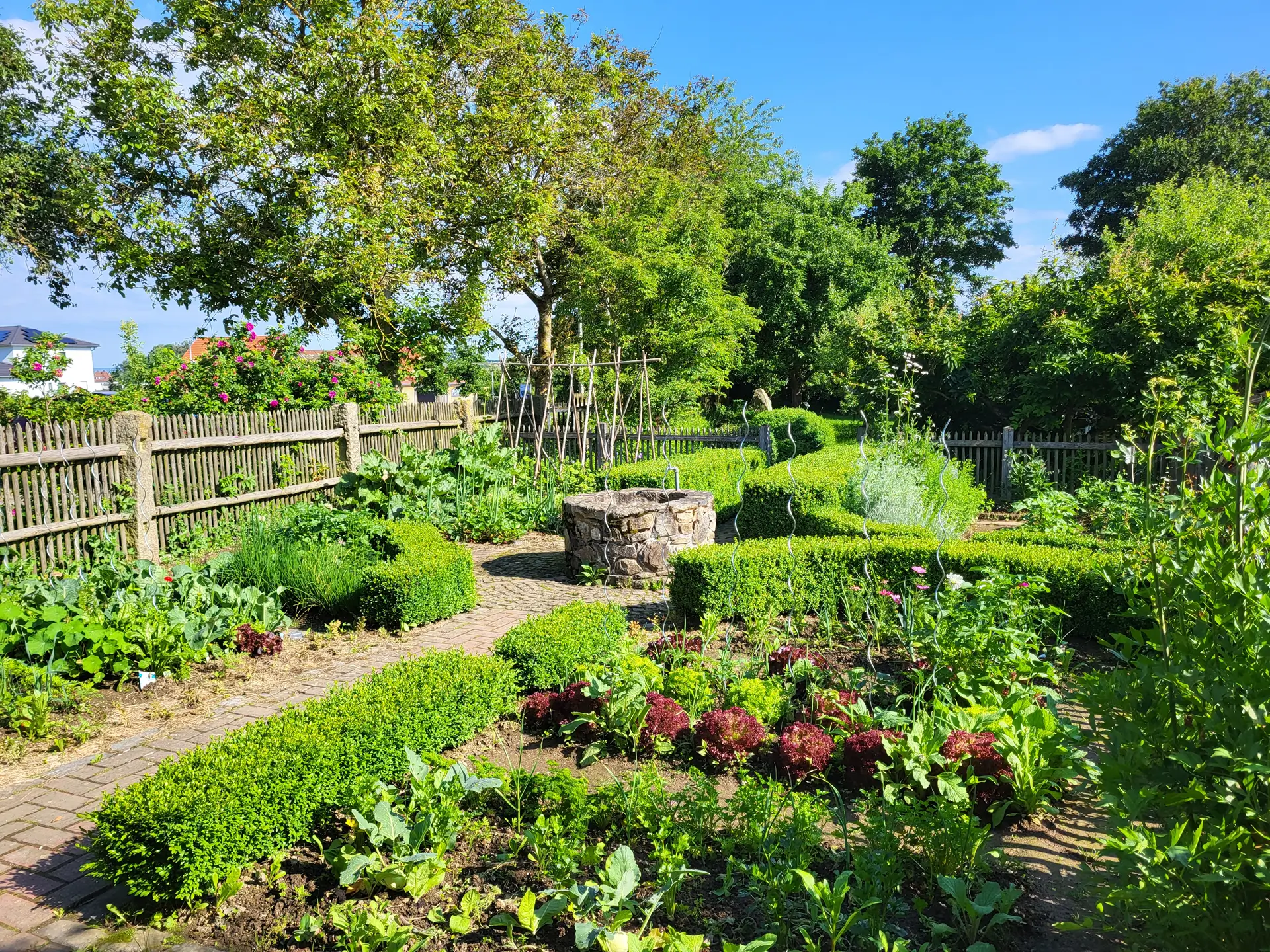
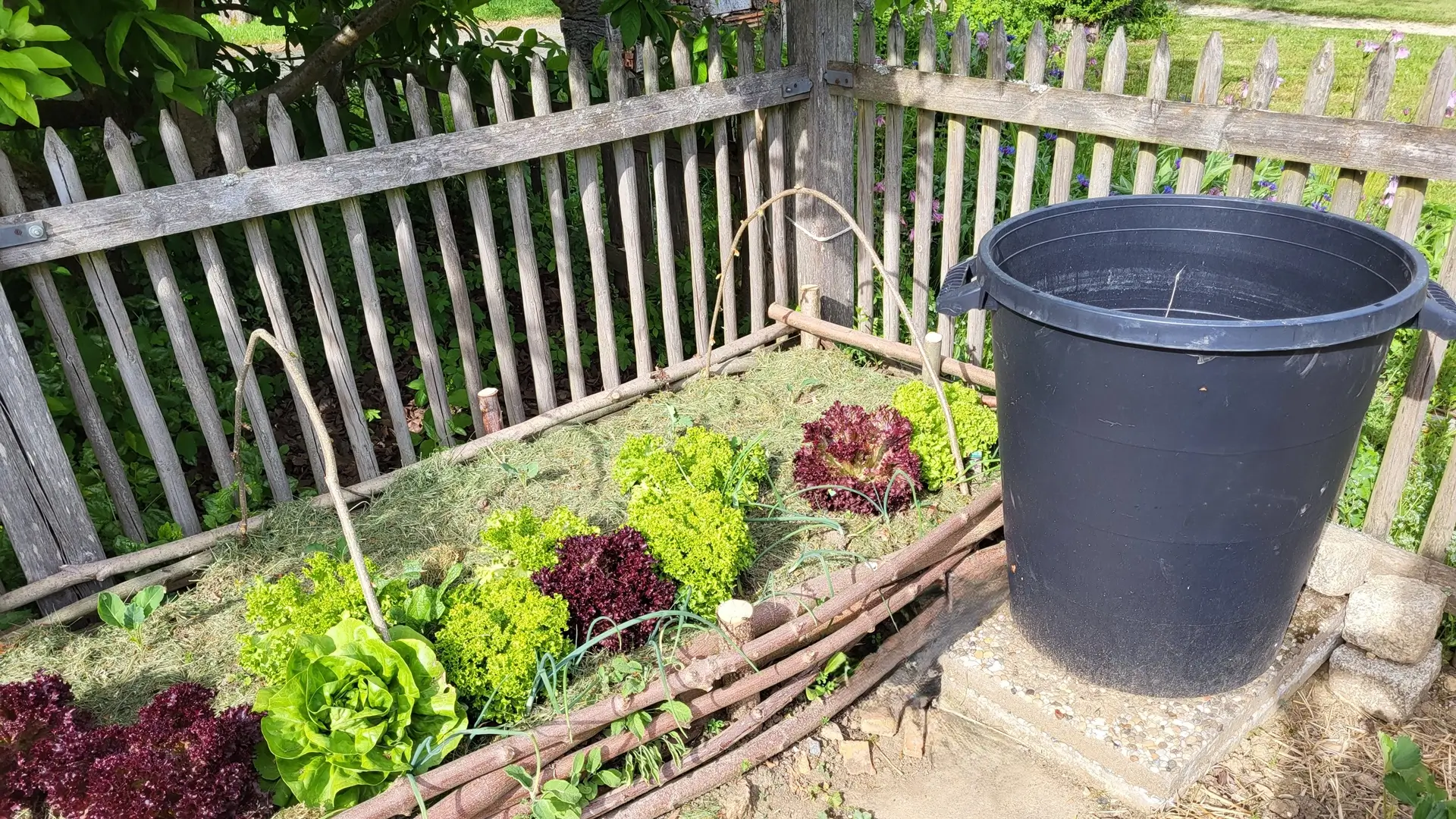
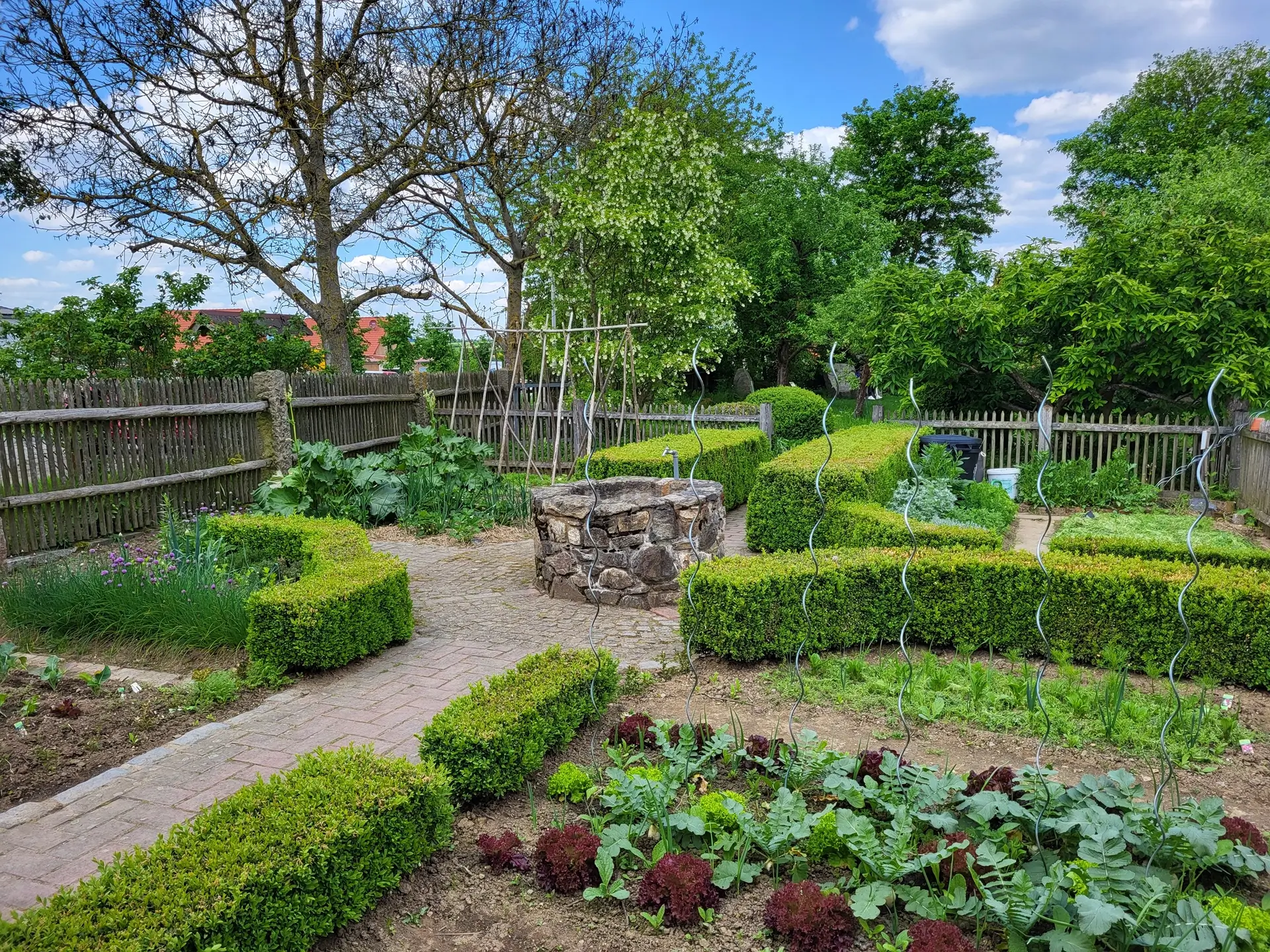
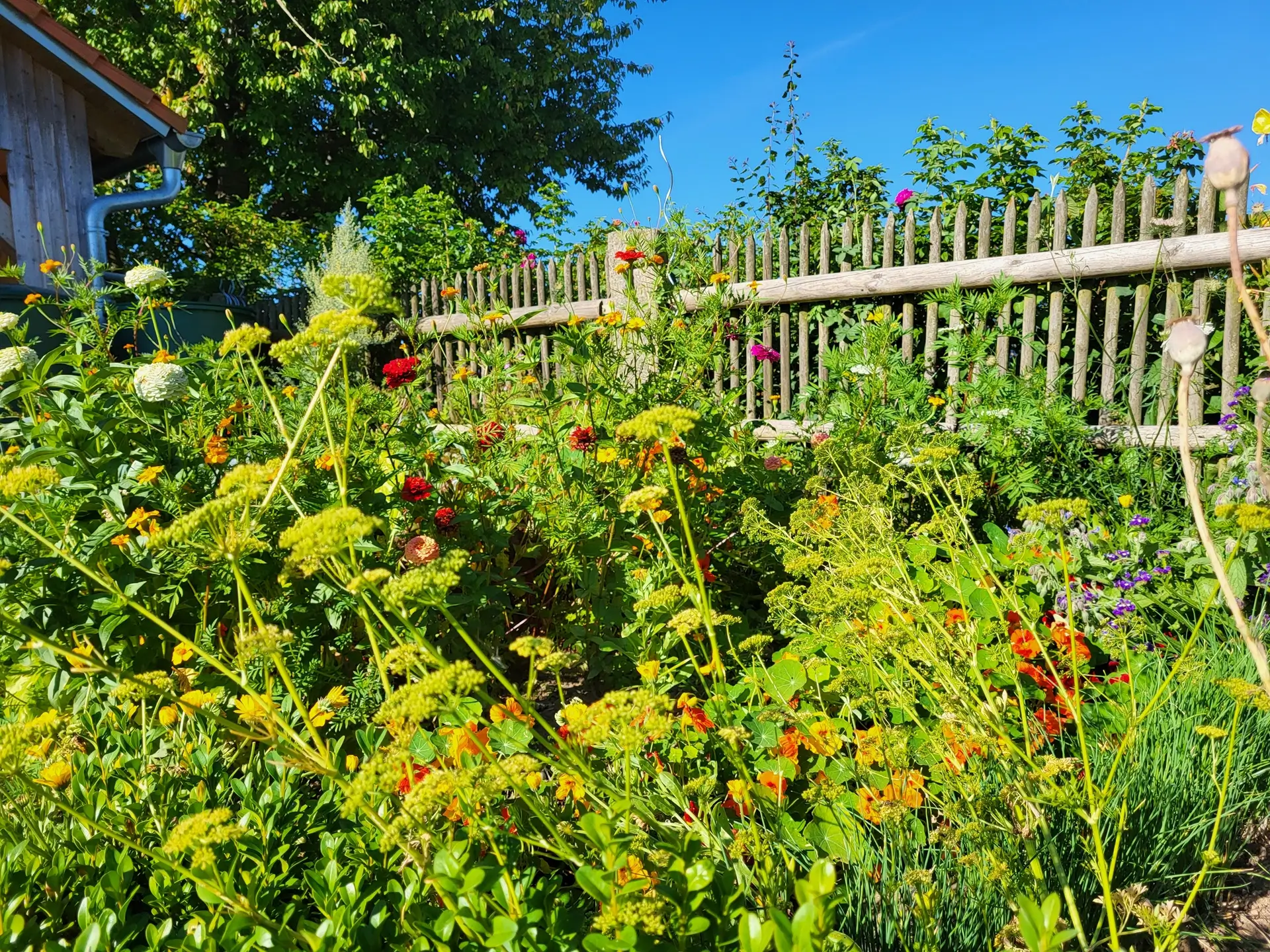
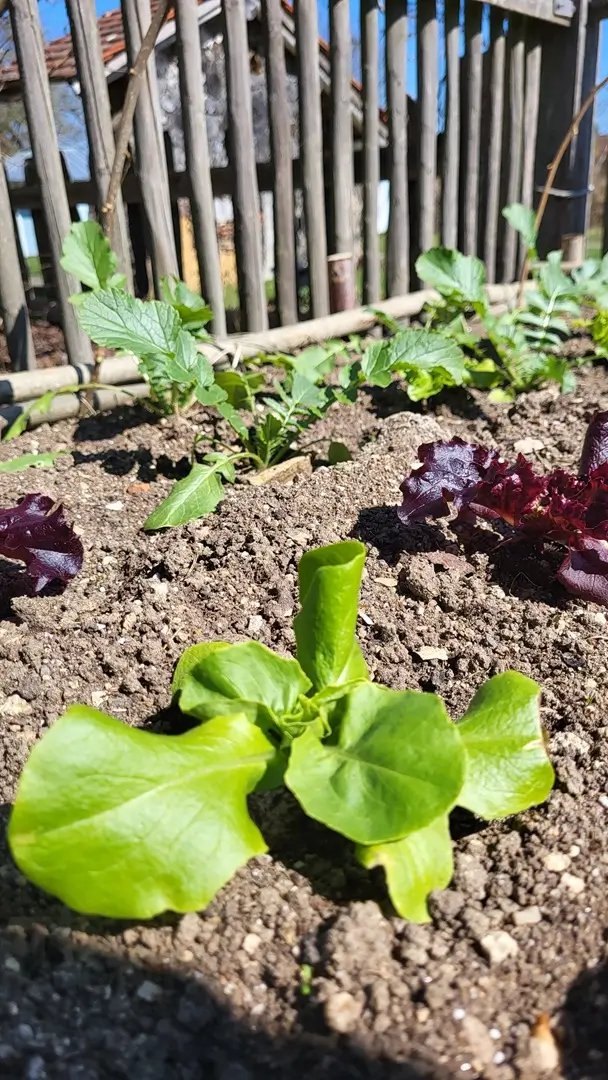
The vegetable garden in the district teaching garden demonstrates the diversity and importance of cultivated plants for nutrition, gardening practice, and ecological relationships. In addition to classic vegetables such as lettuce, radishes, carrots, kohlrabi, and tomatoes, current trends in vegetable cultivation are also explored here. These include modern, resilient varieties, traditional crops, edible flowers, innovative mixed cropping systems, and urban gardening concepts such as raised beds, vertical planting systems, and permaculture approaches. In this way, the garden combines tradition, practical knowledge, and innovation in a clear and engaging manner. At the same time, it shows how vegetable beds can provide habitat for insects such as wild bees, bumblebees, butterflies, ladybirds, and lacewings, helping to keep plants healthy in a natural way.
In spring, sowing and planting of many crops begin. Early vegetables such as lettuce, radishes, spinach, or kohlrabi start to grow and provide the first leaves for harvest. Young plants also offer nectar and pollen for insects, while mixed cropping creates small habitats. In experimental beds, new resilient varieties are tested or innovative plant combinations are used to support growth and reduce maintenance effort. This makes the ecological function of the beds visible while also conveying knowledge about modern cultivation methods.
In summer, the plants develop in full abundance. Tomatoes, zucchini, cucumbers, peppers, and bush beans bear fruit and demonstrate the yields of both classic and innovative varieties. Insects benefit from the blossoms of vegetable plants, and mixed cropping supports beneficial species such as ladybirds, lacewings, and pollinators. Raised beds, vertical planting systems, and small experimental areas with unusual varieties offer visitors inspiration for their own garden design and provide practical insight into how innovative cultivation methods can enhance ecological benefits.
In autumn, the harvest of late crops such as pumpkins, Brussels sprouts, leeks, and root vegetables begins. Seed heads of beans, peas, or green manure plants provide food for birds and insects. The beds remain ecologically active. Mulch and green manure protect the soil, support soil life, and maintain nutrient supply for the following year. The experimental beds also demonstrate how new plants or cultivation methods can be observed over winter and their adaptability assessed.
In winter, the vegetable garden continues to offer learning opportunities. Beds covered with green manure or mulch protect the soil and create habitats for small animals, while remaining seed heads serve as food for birds. Visitors can explore the relationships between cultivation, biodiversity, and sustainability and experience how traditional and modern methods can be combined.
The vegetable garden in the district teaching garden clearly shows that aesthetics, yield, innovation, and ecological function can work together. By integrating current trends, it provides practical knowledge about new varieties, modern cultivation methods, mixed cropping, sustainable care, and support for insects. At the same time, it highlights that vegetable beds not only produce food but also offer habitats for insects and small animals and make an important contribution to biodiversity and ecological gardening practices.