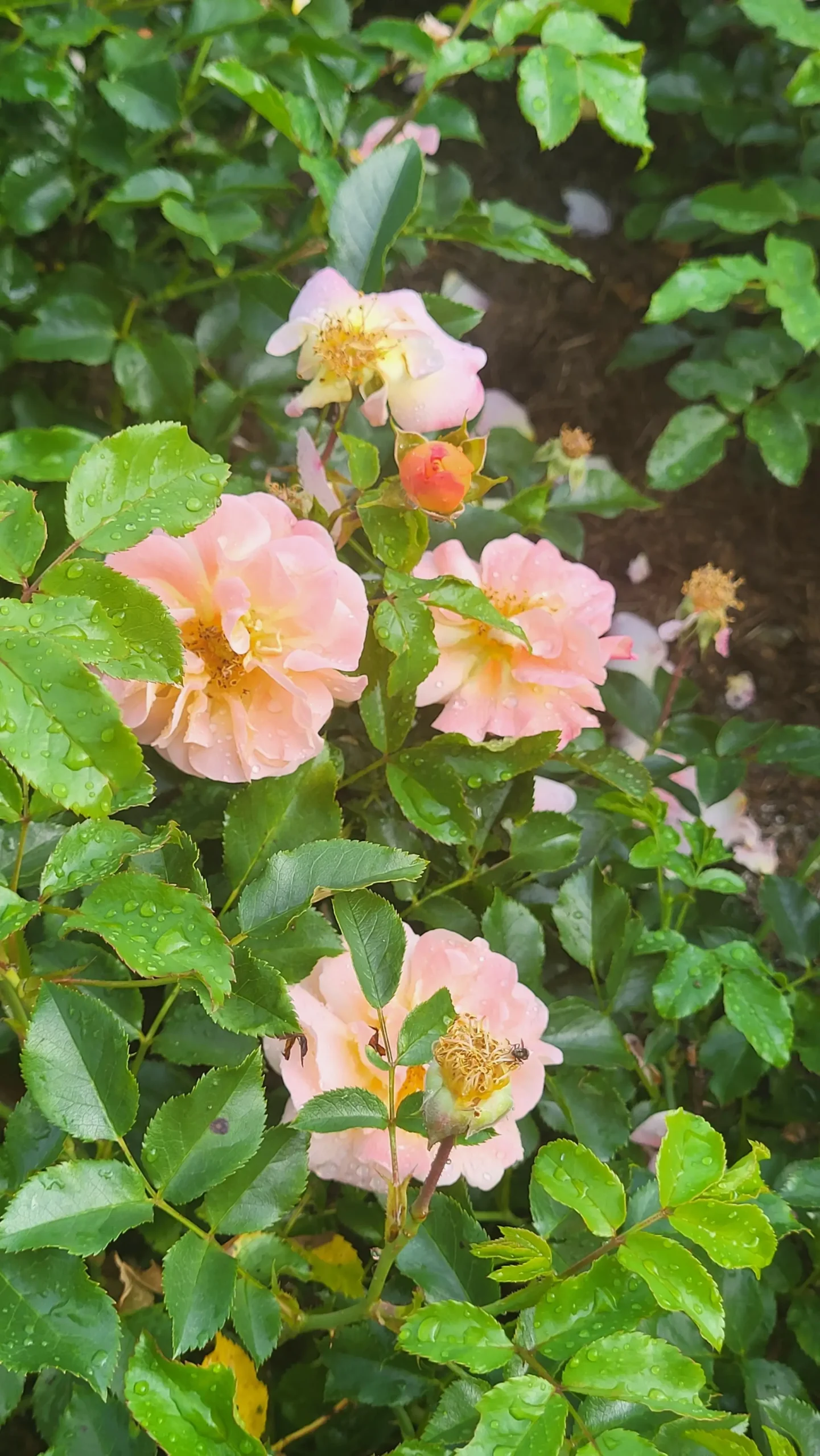
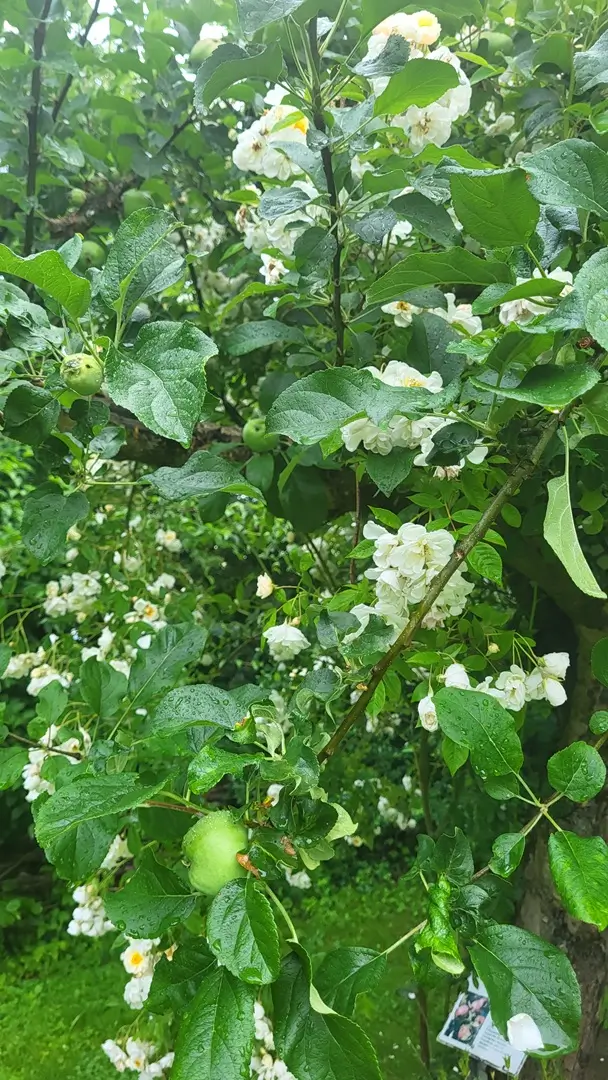
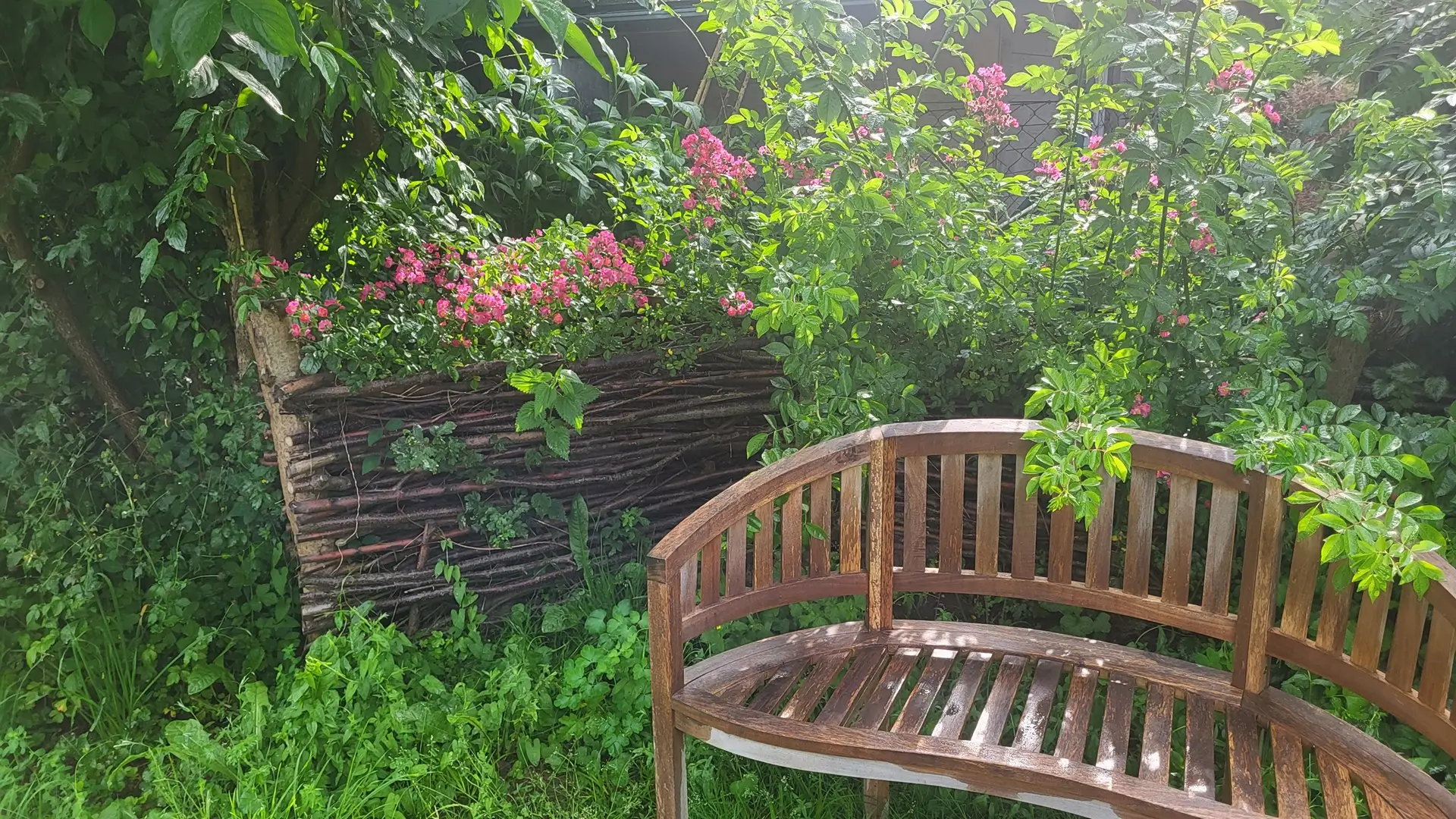
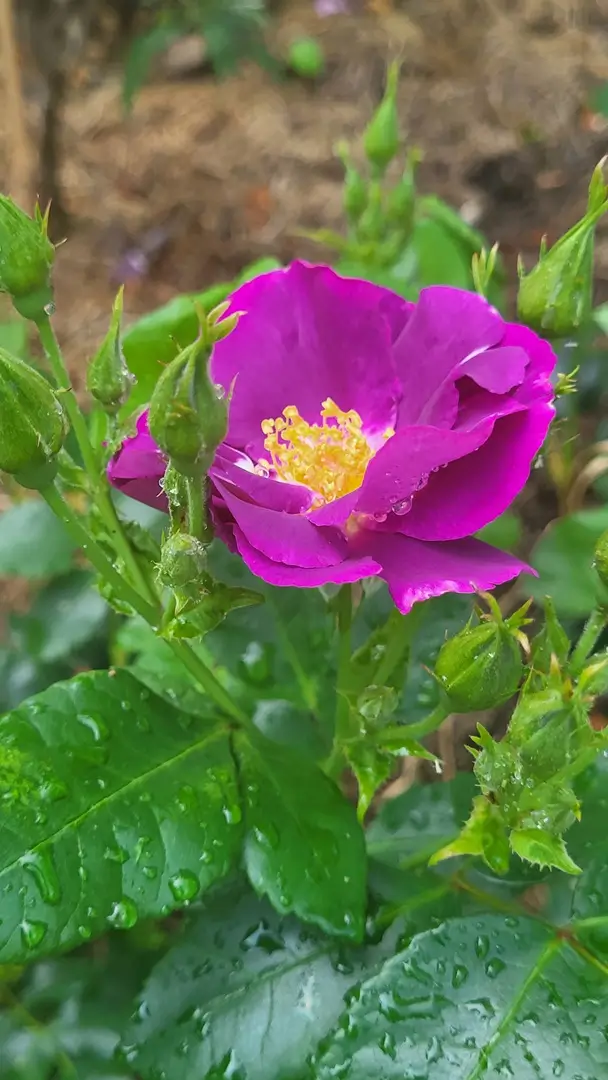
The rose garden in the district teaching garden focuses on bedding roses, ground cover roses, and dwarf shrub roses, clearly demonstrating how beauty, diversity, and ecological function can work together. These types of roses are especially well suited for manageable, low maintenance, and well structured garden areas, as they have compact growth forms, long flowering periods, and a rich variety of blossoms. At the same time, they fulfill an important ecological role. They provide food and habitat for numerous insects, especially bees, bumblebees, butterflies, and other pollinators, making the garden particularly educational for nature enthusiasts.
In spring, the season begins with the first buds. Bedding roses open their strong, often large blossoms and create striking accents in the beds. Dwarf shrub roses and ground cover roses begin to bloom early, often before many surrounding plants. These early blossoms provide insects with urgently needed nectar and pollen after winter. For wild bees in particular, such early flowering roses are essential, as they represent the first food source of the year. The range of flower colors extends from soft pastels to intense shades of pink and red, as well as bright yellow and orange, giving the garden a lively appearance even in early spring.
In summer, the roses reach their peak. Bedding roses develop sturdy, upright stems with large, often fragrant blossoms that are ideal as focal points in planting areas. Dwarf shrub roses grow in a compact and bushy form, making them well suited for edging beds or for smaller garden spaces, while ground cover roses spread widely and appear like living carpets of flowers. This dense vegetation offers not only visual appeal but also shelter for insects, small birds, and other animals. The abundance of summer blooms ensures that during the main activity period of insects, sufficient food sources are available, making the garden especially supportive of insect life.
In autumn, the rose hips come into focus. The bright red, orange, or yellow fruits of many varieties serve as an energy rich food source for birds and small mammals while also extending the decorative effect of the plants. Many rose varieties bloom repeatedly, so nectar and pollen remain available for insects even late in the year. The autumn foliage of the roses further enhances the design of the beds and creates a harmonious combination of color, structure, and natural function.
Even in winter, the rose garden remains attractive and educational. The bare branches of bedding roses and dwarf shrub roses reveal their delicate growth forms, while ground cover roses, with their evergreen foliage, add color to the garden and continue to provide shelter for animals. Rose hips, remaining buds, and sturdy stems contribute to ecological diversity and offer food for animals when other resources are scarce. Visitors can observe the winter structure of the rose plants and learn how care, pruning, and site selection influence the health and flowering performance of roses.
The rose garden clearly shows how bedding roses, ground cover roses, and dwarf shrub roses combine aesthetic appeal, ease of care, and ecological function. It inspires creative planting ideas, provides practical knowledge about site selection, planting, maintenance, and pruning techniques, and demonstrates that roses are not only decorative elements but also valuable habitats for insects, birds, and other garden inhabitants. In this way, the garden uniquely brings together experience, enjoyment, education, and awareness of nature, showing that roses in modern gardens can harmoniously unite beauty and ecology.