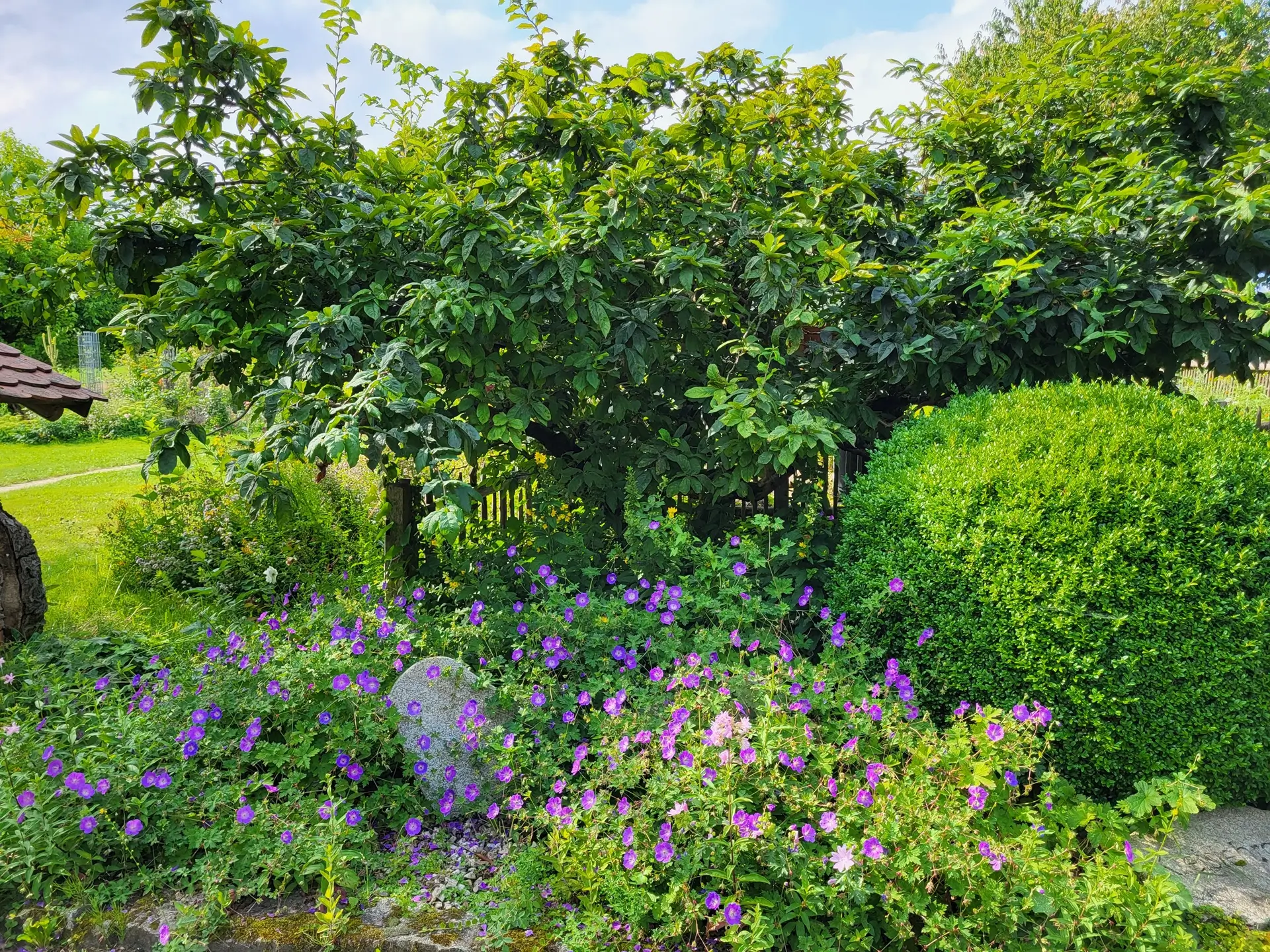
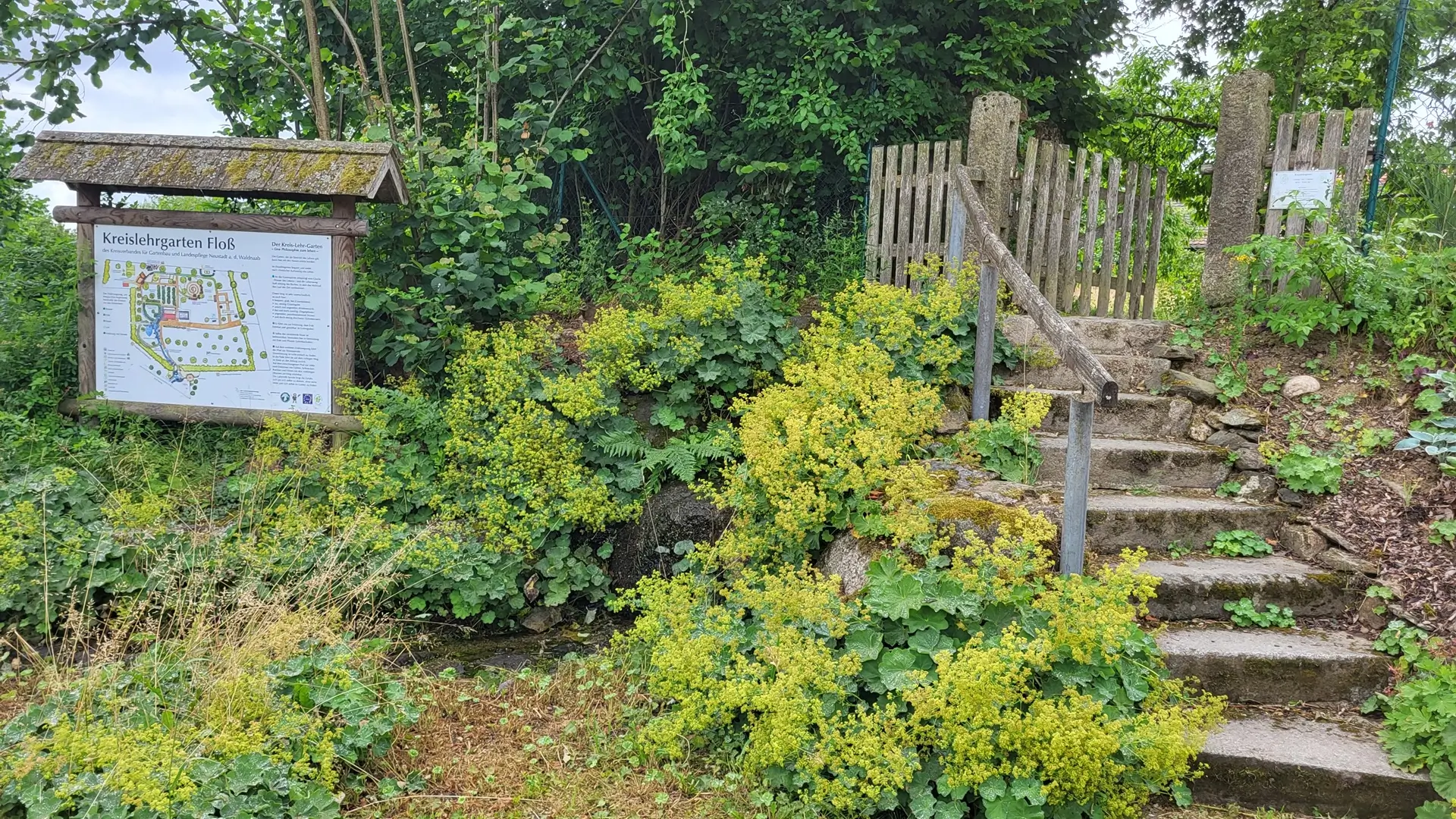
The perennial section in the district teaching garden focuses on drought tolerant and low maintenance perennials that thrive even under challenging site conditions. These plants are particularly resilient to heat, dry periods, and varying environments, making them ideal for natural, sustainable, and easy to care for garden concepts. At the same time, they fulfill important ecological functions. They provide nectar and pollen for insects such as bees, bumblebees, butterflies, and many other pollinators, offer shelter for small animals, and actively contribute to promoting biodiversity.
In spring, the drought tolerant perennials begin to sprout and bring early color accents into the beds. Species such as sage, catmint, stonecrop, lavender, or bergenia develop their first blossoms and fresh foliage, providing insects with their first food sources after winter. Their adaptability makes them especially easy to care for, as they require little water, are rarely affected by disease, and need only minimal pruning. This greatly reduces maintenance effort without compromising the visual appeal of the beds.
In summer, the perennials display their full abundance of blossoms. Coneflowers, lavender, catmint, or daylilies show intense colors, attract numerous insects, and at the same time provide shelter for small animals. Thanks to their strong root systems and their ability to withstand extended dry periods, they remain vigorous without the need for regular watering or intensive care. The variety of heights, flower forms, and leaf structures allows for diverse and attractive planting designs that are both natural and ecologically valuable.
In autumn, the focus shifts to the seed heads and late blossoms of these perennials. Plants such as stonecrop, asters, or autumn anemones bloom well into the season and continue to provide nectar for late pollinators. Faded seed heads serve as food for birds and small mammals, while the leaves and structures of the plants offer shelter for insects. In this way, the perennial section remains attractive and ecologically effective even in the later part of the year.
In winter, the dried stems and seed heads reveal the structure of the perennials and provide habitat for insects, spiders, and other small creatures. Evergreen or hardy species such as bergenia or certain stonecrops add color and structure. Visitors can observe the plants’ adaptation strategies, their resilience to drought, and their ease of care, and learn how to design ecologically valuable and low maintenance planting areas.
The perennial section in the district teaching garden clearly demonstrates that drought tolerance, low maintenance care, aesthetic diversity, and ecological function can go hand in hand. These perennials not only provide decorative effects but also offer habitats, food sources, and protection for animals, promote biodiversity, and inspire the creation of low maintenance and natural garden areas that are both beautiful and sustainable.